Friday, October 29, 2010

Zuppa di Verdura

It’s getting cold here in Bologna, and it’s time to make more soup. In Emilia-Romagna, the most common, and sometimes only, soup we have seen on menus so far is tortellini in brodo (broth), which is more of a pasta dish than a soup. Sometimes there is vegetable soup (zuppa di verdura) available too, and if there is I usually order it, though it is hard to pay 6-8 euro for it when I can make a whole pot of it at home for that price. Now that the weather is changing, I am starting to see more containers of pre-cut vegetables for zuppa di verdura or minestrone available in the outdoor market stands. I wonder if more soups will start appearing in restaurants too.

Since these pre-cut containers usually contain celery, which Paul can’t stand, I haven’t wanted to buy them, but it is nice to see what the typical mix of vegetables would be. A few weeks ago I went to a stand near where we take Italian classes, explained that I wanted to make zuppa di verdura, and the owner, Pasquale, helped me pick everything I would need. Pasquale and his wife Mariella own the stand, called Ortofrutta Mariella, and both are very friendly and are happy to give recipe advice. Going through each ingredient with me one by one, Pasquale added the following to the bag and weighed it all together. (When I told Pasquale I wanted to post the recipe online, he reminded me emphatically to still list celery as an ingredient, because "ci vuole sedano," or it wants (calls for) celery.)

Ingredients:

-1 small onion

-2 carrots

-1 stalk celery

-2 small zucchini

-about 10 pods of fresh borlotti beans

-3 tomatoes

-1-2 large handfuls of green beans

-2 small potatoes

-1 wedge cabbage

-I small bunch swiss chard and/or black kale

-Salt to taste

-Generous pour of extra virgin olive oil

This bag cost 4.29 euro which to me seems like a great deal. Pasquale told me that if I let him know I want a mix with no celery, next time he will have it all cut up for me, but I would rather continue to chop everything myself.

I asked how he would suggest I make the soup and Pasquale said to just shell the beans and chop all of the vegetables into equal size pieces,

put everything in a pot, add water to cover the ingredients, and boil it until everything is tender and the soup starts to look integrated (about 1 hour).

Then at the end, add salt and drizzle with extra virgin olive oil. You can also add pasta at the end to make it more of a minestrone.

This method is different than the one I usually use. Typically when I make vegetable soup I first make a vegetable broth. Then I start by sautéing onions and carrots in olive oil in a pot, and then I add the broth and the other vegetables in stages depending on how long I want them to cook. For example, I would add the cabbage at the very end. My usual method is a similar method to the one that I found in my friend and mentor's book, Around the Tuscan Table by Carole Counihan. I audited Carole's Food Anthropology class last spring at the University of Gastronomic Sciences. In her book, Carole notes that “there are as many minestrone recipes as there are women with kitchens." Although I do like my usual recipe, the way that Pasquale suggested seemed much easier, so I decided to try it. The result is a very light, clean tasting broth, which I like, especially since it takes me back to a memory of eating a soup that my best friend Emily Nackley made when we were in junior high. Not knowing how to cook at that age, I remember being so impressed that she actually made soup and it came out good. Plus, all of the zuppe di verdura I have eaten in restaurants here in Italy have had a clear broth like this one. I went back yesterday to tell Pasquale how much we liked the soup and to buy another custom bag of vegetables to make it again.

Monday, October 18, 2010

Slow Life

I knew we were coming to Italy to learn more about Slow Food, but I didn’t realize we would be learning so much in general about a slower life. This doesn’t mean we are less busy here, we have just been doing things in a slower way, or should I say a more classic way, and spending more of our time on all things domestic and our lives outside of our work.

This picture seems to sum up what I am talking about. Here are our cleaning rags hanging on our clothesline to dry.

Like many Italians, we don’t have a dryer, so we hang everything outside the window. Not only that, but we made a decision not to use many paper products, so we have all cloth napkins and rags, no paper towels, so there is more to wash. The problem is that it doesn’t all fit on the line, so it is often also hanging in random places in the house too. Plus, we are always cleaning, so these rags seem to be constantly dirty.

I read that of all of the women in the world, Italian women spend the most time cleaning. I’m not sure if that is really true, but I do know that Paul and I both spend way more time cleaning here than we ever have – we sweep/vacuum about every other day and mop once a week.

I’m not sure if it is because the tile floors we have seem to show the dirt more, we spend more time at home since we often work here(so we make more of a mess and are here to notice it), we’re naturally assuming the cultural norm, or we simply have more time for cleaning so we clean. On top of the cleaning, add in the grocery shopping, which we do daily, plus the cooking, and the dishes. It is entirely possible to spend a whole day of just grocery shopping, making 3 meals, and cleaning up.

Plus, add in the other things that are a requirement here, like hair drying your hair and ironing. Don’t laugh, this is actually new for me. These may seem basic but I didn’t regulary do either of these in the States. I didn’t even regularly hair dry my hair when I lived in Ithaca NY and it was 30 below in the winter. Here, in Italy, even in the summer, I never see anyone out with wet hair (except at the beach). Also, it is common to iron everything, down to your sheets (and for some even towels). Italians are very well put-together, and don’t leave the house looking messy or wrinkled. I don’t see people looking like they rolled out of bed, in their sweats or athletic clothes, doing errands or getting coffee like I see at home. So we don’t do this here either.

Here in Italy, in addition to spending more time on domestic matters and making ourselves presentable too, we are taking more time to enjoy our life in general, by actually spending time in the park or in the piazza, rather than always working like we did in LA. It took me months to wind down from my LA lifestyle when we arrived here in March. It wasn’t until June that I was relaxed enough to sit in the park with a book for an afternoon. Here we are having a picnic at the park when our friends Jai and Renzo were visiting.

I wonder if I had a normal full time job here in Italy if I would be able to stay less stressed than I was at home. This kind of lifestyle is nice – who doesn’t want to live in a clean house, have home-cooked food, have nicely done hair and neatly pressed clothes, and find time to walk in the park in the evenings? You feel more civilized, like you are really living. But let me clarify, it is nice if you have time to do it. Otherwise it’s too big of a chore. Given our current situation, we have the time to keep most of this up. I do have to confess though that I am still can’t get myself to iron much. I’m terrible at it so it is frustrating. Paul learned in the military, so he will even iron something for me if I am extra nice.

The problem is, how do you maintain all of this when you live in a household where you and your significant other both work full time? And on top of that, what if you have kids too? I’ve been asking around here in Italy and many people our age in this situation still rely on their moms or families for help. In fact, if they are not married, even if they are in a serious relationship, people our age often still live at home. They work full time and their mom, who often stays home, does the cooking, and even most of the cleaning, laundry, and ironing. Or if they don’t live at home, then they may still rely on their mom to give them some homemade food cooked in batches or even help with ironing. A friend of mine told me that she recently went over to her mom’s on a Friday night, brought all of her shirts, and they spent the evening watching TV and taking turns ironing them. Other friends of ours, a married couple in their late thirties, share a house in the country with his brother and his brother’s wife. The house is entirely divided, but the two couples often have dinner together and take turns cooking.

Once again, we face the classic dilemma of not having enough time to live well. I want a slow life, but I don’t know how to sustain it along with a meaningful career. Also, as a health researcher, I want to be able to recommend frequent grocery shopping for seasonal produce and home-cooking, along with sufficient sleep and time for relaxing. After all, stress has been shown to have terrible effects on the body. But even health researchers like me work long hours and seem constantly stressed about publishing and finding funding for their research.

I’m not sure what the answers could be to this classic problem of not having enough time to live well, but I do think that living an isolated life in a nuclear family, apart from close friends and family, makes sustaining “la bella vita” nearly impossible. I think we need to rely on friends and family to share the duties of cooking at the very least. For example, while we were doing our doctoral research, my friend and coworker, Claudia, and I would take turns cooking and making each other lunch and even dinner. It helped that she and her husband Pete conveniently lived in our same complex and we shared an office at work too. As another example, cooking clubs are becoming popular in cities like NYC, where families cooking a big batch of food once a week and distribute it to other families in the group. Or maybe another part of the solution is to find a way to not let yourself get so stressed, even in the midst of a hectic schedule. Exercising helps reduce the stress, but then again you have to find the time.

Though I’m not sure I am any closer to understanding how to balance work and family, living here in Italy has given us a chance to think a lot more about it, and to try out a slower lifestyle.


Thursday, October 14, 2010

Family Marathon, Part 1

We’ve been quiet recently on the blog, but in real life it has been the busiest and most fun stretch we have had so far. Toward the end of the summer, our families started to visit: first Paul’s cousin, then my parents, then his mom. Simultaneously, the working world came back to life after the long summer vacation, and things really started happening with my research study in Verona. Now that our families have gone back, we have a little more time to catch you up on the last month or two.

Paul’s cousin Beth kicked off our family marathon by visiting for a week with her boyfriend Brian.


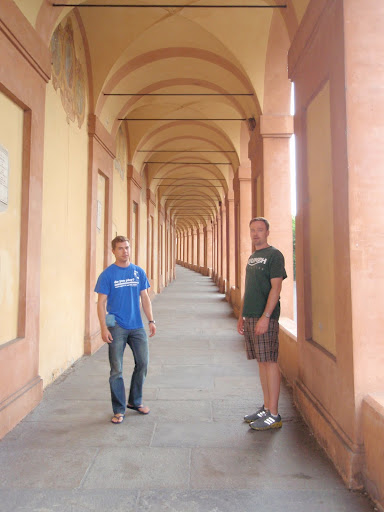
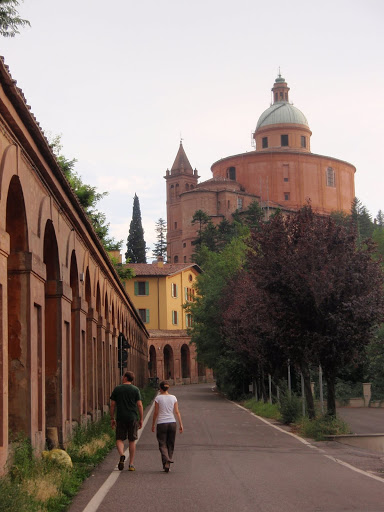
They came at the perfect time – it was toward middle of August when it was starting to seem not only a little depressing around Bologna but also even a little eerie. Everyone had gone on vacation to the beach, and even though we had already taken a week’s vacation to Sicily in July and are living on a small stipend, we were wondering why we hadn’t gone away again too. After all, vacation here is more like a month, if not more. To give you a sense of how vacant the city is: when we asked our landlord what August in Bologna is like, she replied that in the 10 plus years she has lived in Bologna, she has never once set foot in the city in August. So we were happy to have Brian and Beth here to keep us company. We spent a few days showing them around as much of Bologna as we could find open. Some of the best things to see never close, like San Luca, the church on the hill, which you hike to on a path covered entirely by porticos.


There are 666 arches along the path, not the most appropriate number for a religious site, but perfect for those looking to take a little pilgrimage and get a serious dose of exercise at the same time. The 1.5 hour walk is what we call the free gym.


Beth and Brian also cooked us dinner as a thank you for hosting them. It was strange to sit back and watch them cook while we took pictures, but very much appreciated!!

Deciding that we should join the masses and head for the beach too, we went to Cinque Terre for a few days. It rained quite a bit, but we still felt like we got a nice dose of summer vacation.

In my opinion, Cinque Terre deserves all of the attention it gets as an ideal vacation destination. The “cinque terre,” or 5 lands, are 5 towns along the cliffs that overlook the ocean, and they are connected by a long, lush, hiking path with a continuous view of the water.


Walking along the path at night was magical -- during our trip there were meteor showers, so we saw shooting stars everywhere. As a city girl, I had forgotten about these just like I had forgotten about fireflies. The whole scene seemed too picturesque to be real.


It's fitting that part of the path is called Via Dell'Amore, and the thing to do is to engrave a lock and leave it along the trail to symbolize your love.

The train also runs between them, so you can hike us much as you want, and hop on the train when you are tired.

In each of the towns, we stopped to swim (when it was warm enough).

Above are Beth and Brian, about to jump. Below look for Paul in mid-air.


Cinque Terre, like many parts of Italy, is like a big garden. There are things growing absolutely everywhere, from the famous basil used to make pesto Genovese, a specialty of the region, to berries, figs, tomatoes, grapes, etc etc.


Beth embarked on what she named her “no pesto left behind” tour -- she couldn't have picked a better place to do it!

Pesto pasta is oven served with the addition on potatoes and/or green beans, which are often cooked in the same pot as the pasta and mixed into the dish.


Pesto is EVERYWHERE. We couldn't help but think that even the rocks were covered with it.


One afternoon we took a break from hiking and shared a bench with 2 local sisters in their 80s and 90s, and they gave us all of their tips on how to make a good pesto.

Our favorite dinner was at a little place in Corniglia called A Cantina de Manana.
Paul and I ordered the pasta frutti di mare, and were surprised to find it nothing like one we have ever had before. Instead of the usual pre-planned mix of seafood, this was composed of literally whatever happened to be in the net that day, including sea snails and razor clams.
For dessert we had two types of panna cotta, one with lemon zest, and one with honey, and also grapes soaked in grappa.


When Beth and Brian left, it seemed to be the end of summer, yet there were still a few more weeks of 90 degree weather in Bologna (mind you as I write this I am shivering here in the apartment as it is around 50 degrees out and I am thinking of turning on the heater). Despite the heat, we were back to work, trying to get as much done as we could before my parents arrived at the start of September. More to come soon in Family Marathon, Parts 2 and 3.

Thursday, September 2, 2010

Roasted red cabbage: trust me on this one

I like this recipe so much that I am sure you will like it too. In fact, if you don't like it, I will personally reimburse you. The secret is that there's not much to lose here, except my reputation. A head of cabbage, even an organic one from a farmer's market, costs around $1, and I am serious that I will mail you a $1 check if you try this and don't like it. The one I bought last week here in Italy cost $0.68 euro cents. So I am calling all cabbage haters to the challenge. Paul used to be one of them. He would even pick out the thin slices of red cabbage from salads, but will now happily eat a bowl of this roasted version and likes it so much that he wanted me to post the recipe on the blog.

Cabbage doesn't seem to get much credit. It is used so universally throughout the world, so maybe it has been taken for granted. It's time to give it another look. I got the idea for roasting red cabbage from Kami, my friend and former coworker at USC, who would bring containers of the stuff to work and we would eat it like potato chips. But this recipe isn't just for crazy obesity researchers. In addition to being full of vitamins and fiber, it tastes great, makes a colorful addition to a plate, is inexpensive, and is very simple to make with just 3 ingredients.

So there is really no excuse. Buy a cabbage and try it. And don't forget to tell me what you think.

Ingredients:
1 head of red cabbage
Olive oil
Salt
Pepper (optional)

1) Preheat the oven to 400 degrees. A toaster oven that has a roasting pan works too.

2) Remove the outer leaves of the cabbage and rinse if necessary. Make sure to dry it very well as it will be soggy if you roast it while wet.

3) Cut the cabbage in half, slicing through the core.

4) Using a paring knive, remove the core from each half.

5) Lay the flat side of each half on the cutting board and slice the cabbage crosswise into ribbons about 1/2 inch thick.

6) Generously drizzle olive oil on a roasting pan and add the sliced cabbage. Toss it around a bit to distribute the oil and then roughly spread it into a thick layer. It is okay if pieces overlap. But do not pile it too high or else the cabbage will steam instead of roast. I made it here in Italy in our toaster oven so was only able to use half of a small cabbage at once. At home in LA I can fit a whole small to medium cabbage on a sheet pan. Sprinkle with salt and pepper.


7) Roast for about 25 minutes, checking and tossing every 5 minutes or so to prevent burning. Here's what it should look like when it is done. Some parts will remain a bit crunchy and others will be crispy.


8) Serve either in a bowl by itself or as a colorful side dish. Other vegetables like zucchinni and carrots can be roasted in the same way and served with the cabbage too.


Buon appetito!